
FLARM Technology Guide
Key Features
What is FLARM?
FLARM is a lightweight, aircraft-specific collision avoidance system widely used in Europe, particularly among glider pilots. Unlike transponder-based systems, FLARM uses GPS position and a proprietary radio protocol to share aircraft positions and predict potential collision paths.
The system calculates relative motion between aircraft and provides warnings when collision risk is detected. With over 50,000 installations worldwide, FLARM has become the de facto standard for glider and light aircraft collision avoidance in Europe.
FLARM Frequency
ISM Band (License-free)
Europe
ISM Band
USA, Australia
FLARM uses the license-free ISM band, allowing installation without additional radio permits. Range is typically 3-5 km depending on antenna and terrain.
How FLARM Works
Position Broadcasting
Each FLARM device broadcasts its GPS position, altitude, speed, and climb rate on 868 MHz (Europe) or 915 MHz (US/Australia). Broadcasts occur approximately once per second with a range of several kilometers.
Collision Prediction
The system predicts flight paths up to 18 seconds ahead. When two aircraft trajectories indicate potential conflict, visual and audio warnings alert pilots with time to take evasive action.
Open Glider Network (OGN)
OGN receivers on the ground pick up FLARM signals and relay positions to an online tracking network. This allows real-time tracking of gliders and integration with flight tracking services.
Stratux Integration
Our Stratux devices receive FLARM signals and display traffic on your EFB app alongside ADS-B traffic. Models with I/O capability can also transmit your position to other FLARM-equipped aircraft.
Useful Tools
FLARM/OGN Range Analyzer
Analyze your FLARM signal range and coverage based on real reception data from OGN ground stations across Europe.
Open Range AnalyzerProducts with FLARM Support
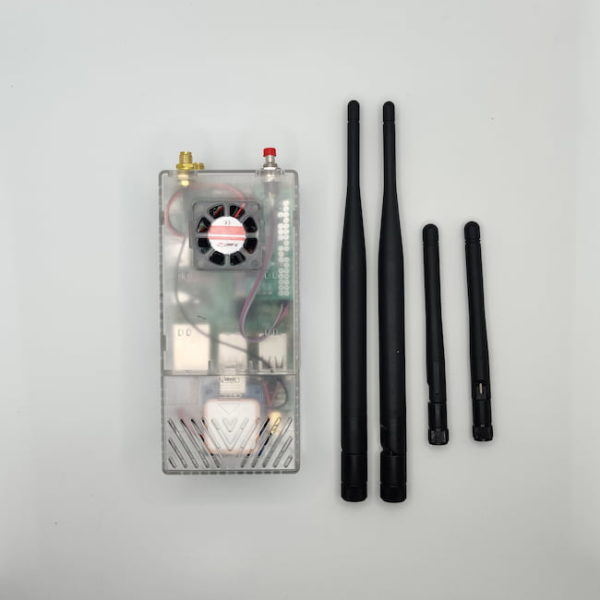
Standard Stratux: receives (RX) only: ADS-B/ OGN/ADS-L/FANET/PAW/ FLARM
439,00 €, 489,00 €
incl. VAT
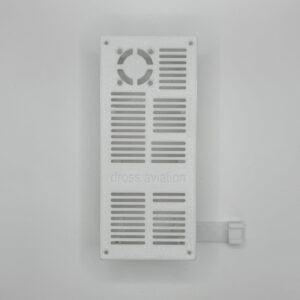
Stratux Pro: receives (RX) ADS-B/ OGN/ADS-L/FANET/PAW/ FLARM + transmits (TX) OGN/ADS-L/FANET/PAW
599,00 €, 749,00 €
incl. VAT
Stratux Dual Pro: receives (RX) ADS-B/ OGN/ADS-L/FANET/PAW/ FLARM + transmits (TX) OGN/ADS-L/FANET/PAW + FLARM
599,00 €, 999,00 €
incl. VAT
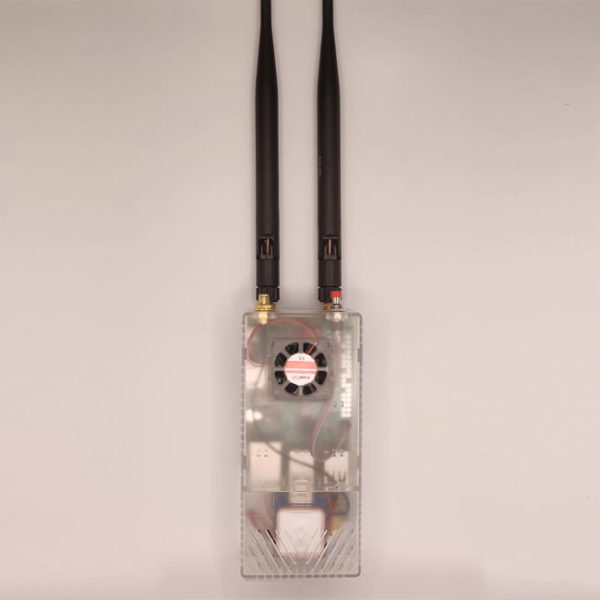
Stratux Dongle: transmits (TX) only - OGN/ADS-L/FANET/PAW or FLARM/FANET
99,00 €
incl. VAT
Related Technology Guides
Get FLARM-Compatible Equipment
All our Stratux devices include FLARM reception. Choose a model with I/O capability for transmission to be visible to other FLARM-equipped aircraft.