
ADS-B Technology Guide
Key Features
What is ADS-B?
ADS-B stands for Automatic Dependent Surveillance-Broadcast. It's a surveillance technology where aircraft determine their position via GNSS (GPS) and periodically broadcast it, enabling other aircraft and ground stations to track them.
In Europe, ADS-B operates on 1090 MHz using the "Extended Squitter" (1090ES) format. This is the same frequency used by Mode S transponders, making it compatible with existing radar infrastructure while providing more detailed position information.
ADS-B Frequency
1090ES (Extended Squitter)
Europe & Worldwide
UAT (Universal Access Transceiver)
USA Only (below FL180)
In Europe, only 1090 MHz is used for ADS-B. All Stratux devices include 1090 MHz reception as standard.
ADS-B In vs. ADS-B Out
ADS-B OutMandated
ADS-B Out ADS-B Out broadcasts your aircraft's position to ATC and other aircraft. This requires a certified transponder and is mandated for IFR operations in Europe.
- Required for IFR flights in EASA airspace since June 2020
- Requires certified Mode S transponder with GPS
- Transmits position, altitude, speed, callsign
ADS-B InStratux
ADS-B In ADS-B In receives traffic and weather broadcasts. Stratux provides ADS-B In capability at a fraction of the cost of certified equipment.
- Receives traffic from ADS-B equipped aircraft
- No certification required for receive-only
- Works with any EFB app (SkyDemon, ForeFlight, etc.)
ADS-B in Europe
In Europe, 1090ES is the standard for ADS-B. Unlike the US where 978 MHz (UAT) is also used, European airspace exclusively uses 1090 MHz for both commercial and general aviation ADS-B traffic.
While ADS-B Out is mandated for IFR flights, many VFR aircraft-especially gliders and light sport aircraft-don't transmit ADS-B. This is why receiving FLARM and OGN traffic alongside ADS-B is essential for complete situational awareness in Europe.
Bearingless Targets
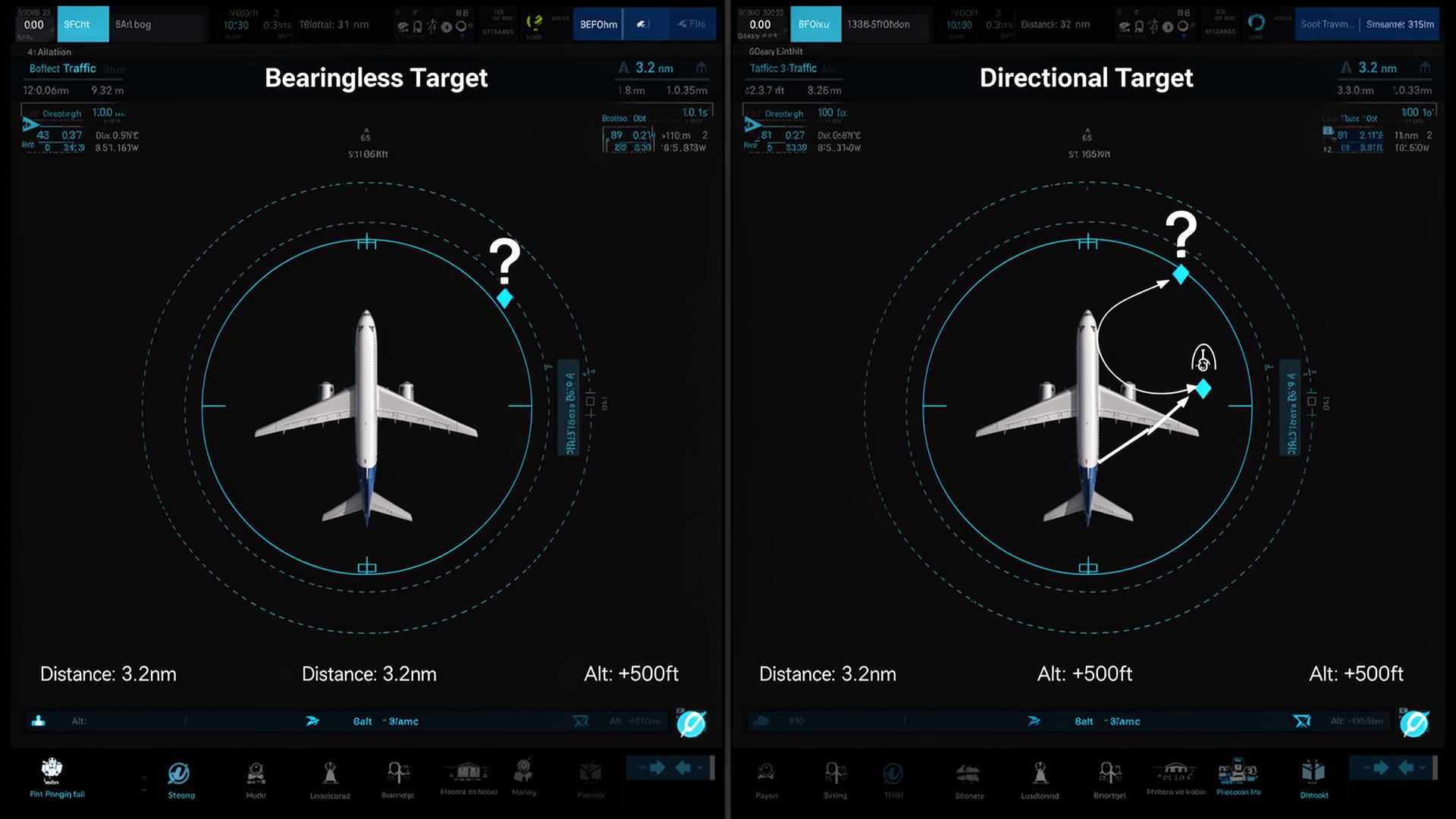
Bearingless targets (also called 'range-only' or 'non-directional' targets) are ADS-B contacts where your receiver knows the distance to the aircraft but cannot determine its direction relative to you. This occurs because standard ADS-B receivers lack the antenna arrays needed to calculate bearing information.
In your EFB app, bearingless targets typically appear as a ring-3 or circle around your aircraft position at the reported distance, or as a target icon with a question mark indicating unknown direction. The target's altitude and vertical trend (climbing/descending) are usually still available.
Why bearingless targets occur: Unlike FLARM which uses time-difference-of-arrival (TDOA) with multiple antennas, simple ADS-B receivers with a single omnidirectional antenna can only measure signal strength and decode the transmitted position. Without GPS on your own aircraft or directional antenna capability, relative bearing cannot be calculated.
To see directional traffic: Ensure your Stratux has GPS lock and your EFB app is configured to use own-ship position. Most EFB apps will then calculate the bearing to each target using both positions.
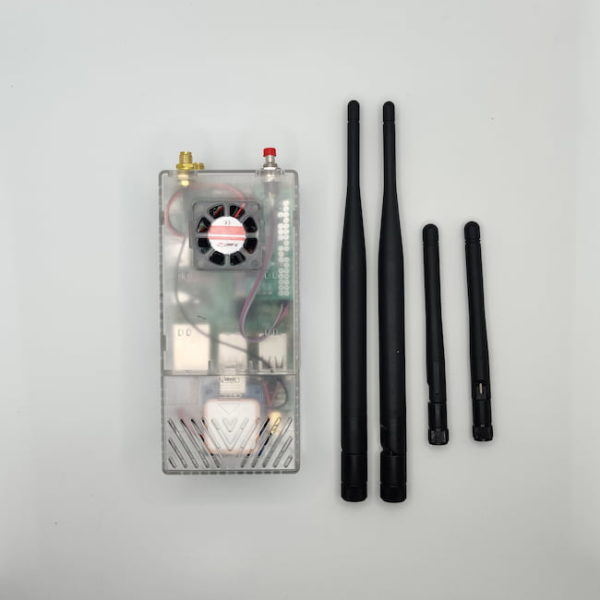
Stratux ADS-B Receivers
Related Technology Guides
Add ADS-B Traffic to Your Cockpit
All Stratux devices include 1090 MHz ADS-B reception. See traffic information directly in your favorite EFB app.